

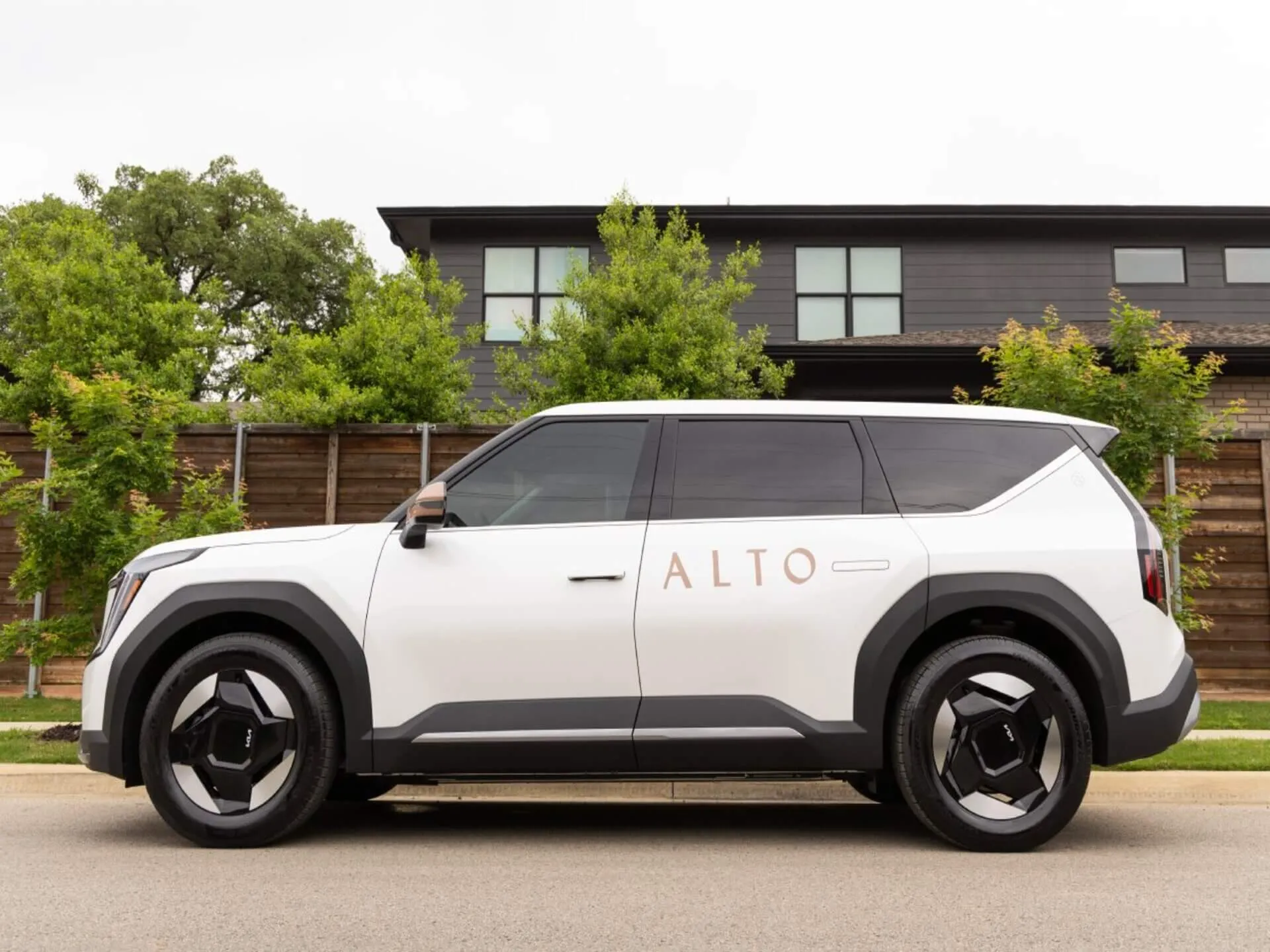
Alto operates the cars and employs the drivers
Alto describes itself differently from the other rideshare services in Houston. Its terms of service refer to rides provided through Alto’s dedicated fleet of vehicles and its employee drivers; its site says its drivers are employees with hourly pay and benefits rather than gig workers, that it owns and operates its fleet from its own depots with charging and maintenance, and that every ride is monitored through in-vehicle video. Riders book through Alto’s own app as members or guests, and Alto’s site lists Houston, along with Dallas, as a market it serves directly, with published service hours.
That model matters because it changes the records. A collision involving a contractor’s personal car turns on the driver’s app status and the driver’s own policy. A collision involving a company-owned vehicle driven by an employee on shift turns on the company’s employment, dispatch, maintenance, and camera records, which is the set of questions any commercial vehicle accident raises for a business fleet. An Alto matter is both a rideshare matter and a company-vehicle matter, and the firm reviews it as both.
Alto also states that in Los Angeles and Miami its vehicles and drivers operate on the Uber platform, and that Uber is an investor in the company. Alto does not describe any such arrangement for Houston, and this page does not assume one. A Houston trip booked through the Alto app is an Alto trip. Leatherwood & Schindler is not affiliated with Alto Experience, Inc., Alto Operations Texas LLC, or any other Alto entity; the Alto name on this page identifies the service involved in a collision.
Employee drivers change the questions
When a driver is an employee doing the employer’s work, the employer questions of a company-vehicle collision apply, and Texas answers them from the record rather than from the company’s description of itself. Alto’s published statements that its drivers are trained, background-checked employees who are monitored in real time suggest the records that may exist: the employment file, the training records, the shift and dispatch records, and the monitoring data. Whether Alto or one of its affiliated entities answers for a particular collision is a legal question that counsel decides from those records.
Alto holds a Texas transportation network company permit, so the state statute that governs rideshare companies governs Alto as well, including the requirement to keep ride and driver records; which of the insurance-chapter duties reach a company-owned vehicle with an employee driver is among the questions counsel confirms. That Texas rideshare framework is explained separately. Because Alto employs its drivers and owns the vehicles, its questions about a contractor’s personal policy and its exclusions apply differently, and counsel confirms which of the Texas rideshare rules reach an Alto trip. A statute enacted in 2023 that limits a rideshare company’s responsibility for its drivers is written around drivers logged in to a company’s network, and how it applies to an employee-driver service is among the questions counsel reviews.
Company vehicles, depots, and in-vehicle cameras
Alto states that it provides the vehicle to the driver and pays for fuel and maintenance, that its fleet is staged and serviced at company depots, and that its vehicles are monitored in real time. Those statements point to a maintenance history, a vehicle-assignment record, and monitoring data that would sit with the company rather than with an individual driver, and the firm requests them along with the trip record.
The camera is the record most specific to Alto. Alto’s terms state that all drivers, customers, and other people inside an Alto vehicle are video-recorded at all times, that people immediately outside the vehicle may also be recorded, and that the recordings are Alto’s sole property. Its privacy policy states that recordings of every trip are uploaded to a secure cloud server through a named third-party service provider, that Alto reviews them on the express written request of a driver or customer, when it believes safety is at risk or its terms were violated, or to manage its service, and that it discloses information to comply with subpoenas and court orders.
Alto does not publish a retention period. A written preservation request that identifies the trip by the account, the date, and the time is the first step in an Alto matter, and it goes to Alto before the recording’s retention period, whatever it is, runs out.
Which Alto entity is involved
Three names appear in Alto’s own documents. The rider terms and the app listing name Alto Experience, Inc. The Texas transportation network company permit is held by Alto Operations Texas LLC, which Alto’s non-discrimination policy describes as doing business as Alto. The site’s copyright notice names Alto Technology LLC. Which entity employs the Houston drivers, owns the Houston vehicles, and carries the insurance is not stated on the site, and the firm establishes it early from Alto’s records and the state’s.
On insurance, Alto publishes a general statement that it maintains automobile liability insurance for all vehicles providing service through its platform, along with uninsured and underinsured motorist coverage as required by law, but it names no insurer and publishes no Texas certificate. Alto’s terms also contain a limitation on the company’s contractual liability to its customers, whose effect on an injury claim is a legal question. The firm requests the policy and the terms in force on the date of the collision rather than relying on the summary.
Members, guests, and the booking record
Alto’s riders are members with a paid subscription, guests with a non-member account, or people invited into the vehicle by the customer who booked the ride. The booking record, the receipt, and the account data sit with the account holder, and Alto’s terms provide that the booking customer consents to recording on behalf of everyone the customer brings into the vehicle, including minors. A passenger who did not book the ride therefore needs the account holder’s cooperation to retrieve the trip record without process, and the firm identifies who booked the ride early.
Reporting a collision to Alto
Alto does not publish an accident-reporting page or an in-app crash tool of the kind Uber and Lyft describe. Its published contact channels are a phone and text line, a support email address, and a trip-issue form in its help center, and its zero-tolerance policy directs a rider who suspects an impaired driver to end the trip, call 911, and email its support address. A report made through any of those channels becomes part of Alto’s record of the trip, and the firm asks to see it. A claim against Alto’s insurer proceeds through the policy Alto identifies, which the firm requests directly.
Alto and the neighboring pages
The employer, ownership, and fleet-record questions of a commercial vehicle accident apply to an Alto vehicle. Uber and Lyft are contractor-platform services with records of their own. An Alto driver injured on the job has a different set of questions, beginning with the employer’s workers’ compensation coverage status. Every collision also leaves the ordinary roadway record.
Bringing an Alto trip to the firm
An Alto matter starts with the booking. A consultation begins with:
- the booking record and receipt;
- the name of the account holder who booked the ride;
- the driver and vehicle as the app showed them;
- any message already sent to Alto; and
- the police crash report.
At the time of a matter the firm confirms Alto’s current Houston operation and entity structure, sends the preservation request for the in-vehicle recording, and builds the review from the company’s records.