

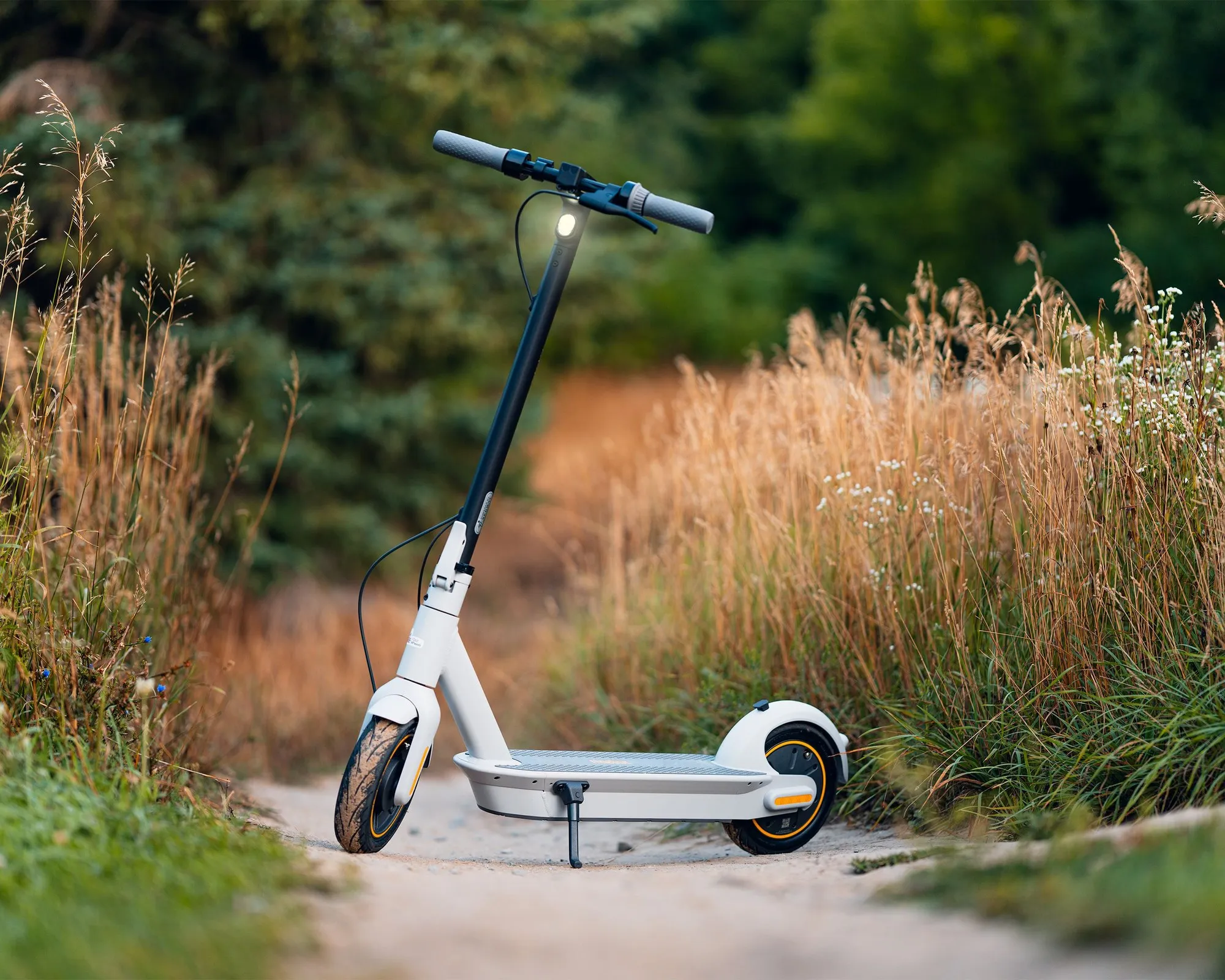
Rider, device, and the company behind it: three questions at once
A collision involving a stand-up electric scooter is reviewed for what the rider did, what the device did, and, when the scooter was rented, what the company that owned and maintained it controlled. A car turning across a scooter’s path, a pedestrian struck by a rider on a sidewalk, a brake or battery that failed, a pavement defect that threw the rider, or a combination of those can be the event, and each points to different records held by different people.
Texas defines several kinds of small motorized devices, and Houston has local operating and rental restrictions. We examine those distinctions and the evidence a scooter collision leaves. When a motor vehicle was involved, the crash report, the investigating agency’s file, and the comparison Texas makes of each party’s conduct are the same as in any car accident.
What Texas calls a motor-assisted scooter
Texas classifies the actual device by its statutory characteristics, not simply by whether it has a seat. A motor-assisted scooter has at least two ground-contact wheels, an effective brake, a motor, a deck for standing or sitting, and the ability to move by human power alone. The definition also contains motor-size language and excludes pocket bikes and minimotorbikes, which the scooter subchapter does not authorize on streets, bicycle paths, or sidewalks. The complete definition is checked against the actual device.
The statute then sets the operating rules. A motor-assisted scooter may be operated only on a street or highway with a posted speed limit of 35 miles per hour or less, though it may cross a faster road at an intersection. It may be operated on a path set aside for bicycles, and on a sidewalk unless a county or city prohibits that in the interest of safety, and the Texas Department of Transportation may prohibit it on a highway. The provisions of the Transportation Code that apply to a bicycle apply to a qualifying scooter with statutory exceptions, and the provisions that apply to a motor vehicle do not.
For a qualifying motor-assisted scooter, no state license or registration is required, and the Texas Department of Motor Vehicles describes most motor-assisted scooters as unable to pass inspection or be registered. The Texas crash report codes the device as a motorized conveyance, a category separate from motor vehicles, mopeds, and bicycles.
Those definitions decide which rules apply. A saddle alone does not establish that a device is a moped or motorcycle; the other statutory characteristics must also be considered. A motorcycle is reviewed under its own rules. An electric bicycle, with operable pedals and its own class definitions, is a bicycle. A self-balancing electric personal assistive mobility device has rules of its own, and a personal watercraft is a vessel under the Parks and Wildlife Code. Which of those a device was is settled before any rule is applied to it.
Houston’s rules: the 2021 rental ordinance and the 2025 curfew
Houston has restricted commercial scooter display and rental in the public right of way. In November 2025 the City Council approved amendments using the broader term micromobility device, which includes electric scooters, hoverboards, electric skateboards, and electric roller skates. The City describes the amendments as effective immediately after approval on November 19, 2025. They make it unlawful to operate such a device or an off-highway vehicle on any public roadway, street, alley, sidewalk, trail, or city park within the city between 8 p.m. and 4 a.m., unless state law expressly authorizes it.
The ordinance makes it unlawful for a parent or guardian to permit a minor to ride during those hours, prohibits temporary rental structures anywhere in the city, and provides defenses for a person traveling directly to or from work or school, responding to an emergency, or performing official duties. Houston’s park rules separately restrict scooters in city parks.
The operating restrictions and the rules for offering rentals are separate. The ordinance also restricts renting or offering these devices for rent during curfew hours. A rental agreement or a business operating from private property does not establish that riding the device on a particular public route was lawful.
The rental operator and the records it may hold
An app-based rental from a public location and a storefront or private-property rental are different arrangements. The agreement, receipt, account information, and the unit’s identifying number help establish which company supplied the scooter and on what terms. The review identifies the operator involved in the actual incident rather than assuming a company’s presence or absence from a changing rental market.
The difference matters for evidence. An app-based operator can record the account, the unlock and lock times, the route, the speed, and geofenced zones where the scooter slowed or stopped, and can keep fleet maintenance and charging logs. A storefront rental may keep only the rental agreement, a receipt, an identification check, and a condition checklist, and its scooters may be personally maintained rather than tracked by software. The firm confirms which company owned the scooter from the rental record, asks what it recorded, and does not assume a record exists because a competitor’s scooters would have produced one.
Trip data, the rental agreement, and the device itself
The scooter is evidence, whoever owned it. Its brakes, tires, throttle, battery, lights, and the folding latch on its stem are examined before it is repaired, recharged, or returned to a fleet, and a rental company is asked in writing to preserve the specific unit. Photographs of the pavement, the curb, the drainage grate, or the debris where the rider fell are taken before the location changes, and a property owner who controlled that surface may hold its own maintenance and camera records.
Where an app recorded the trip, retained trip data may show when the ride began, where it went, how fast the scooter moved, and where it stopped, and retained fleet records may show when the unit was inspected, charged, or reported, depending on the actual system and available data. Where a defect in the device or its battery is in question, the manufacturer and the distributor become part of the review, and the Consumer Product Safety Commission’s role, which includes participating in voluntary industry standards for powered scooters and receiving incident reports, is a source of context rather than a rule that decides anything. The rental agreement or app terms are read for what they say about responsibility, disputes, age, and permitted riding areas, and whether any provision affects a particular claim is a legal question counsel evaluates from the text.
Video and witnesses matter as much as in any collision. Business and residential cameras, dash cameras in nearby vehicles, and the rider’s own phone can show the moments before contact, and that footage does not wait. When the rider was struck by a driver who left, hit-and-run identification work and the review of potentially applicable coverage proceed together.
Sidewalks, bike lanes, driveways, and the people a scooter shares them with
For a qualifying motor-assisted scooter, Texas applies bicycle provisions with statutory exceptions, including the lane-position framework for bicycles. Texas also includes a motor-assisted scooter in its sidewalk-user definition, with the same crosswalk and stop-sign rules. The device, the rider’s position, and the controls at the location determine which rules need to be applied.
When a scooter rider strikes a person on foot, the person struck is reviewed as a pedestrian, and we also examine the rider, the device, and the rental company. When a car, truck, or bus strikes a scooter rider, the vehicle side of the review follows the rules for a car, a commercial truck, a company vehicle, or a bus, depending on what the vehicle was.
Helmet use, the rider’s age, and the actual device are part of the record. Any applicable equipment requirements depend on the device classification and local rules. Protective equipment does not by itself decide who caused the collision.
Where a scooter matter stops and another page begins
- A car, truck, bus, or company vehicle that struck a rider is investigated under the rules for that vehicle.
- A device meeting the motorcycle definition is reviewed as a motorcycle; a device meeting the separate moped definition is outside this page’s scope. A saddle alone does not settle either classification.
- A bicycle or an electric bicycle, and the lane-position and sidewalk-user rules, are reviewed as bicycle matters.
- A person on foot, including a person using a wheelchair or a mobility device, is a pedestrian.
- A personal watercraft is a vessel.
- If a scooter collision is fatal, a wrongful death claim raises the family and estate questions, and the device, rider, and rental questions here remain the event record.
Talking with the firm about a scooter collision
The rental record comes first: the agreement, the receipt, or the app account, and the unit number if it is known. If the scooter is yours, keep it as it is, and photograph the device, the pavement, and the location before anything changes. Bring those to a consultation, along with the crash report number if a report was made, the names of witnesses, and the medical records so far. Leatherwood & Schindler will work out what the device was, where it could lawfully be ridden, who owned and maintained it, and which records bear on what happened.