

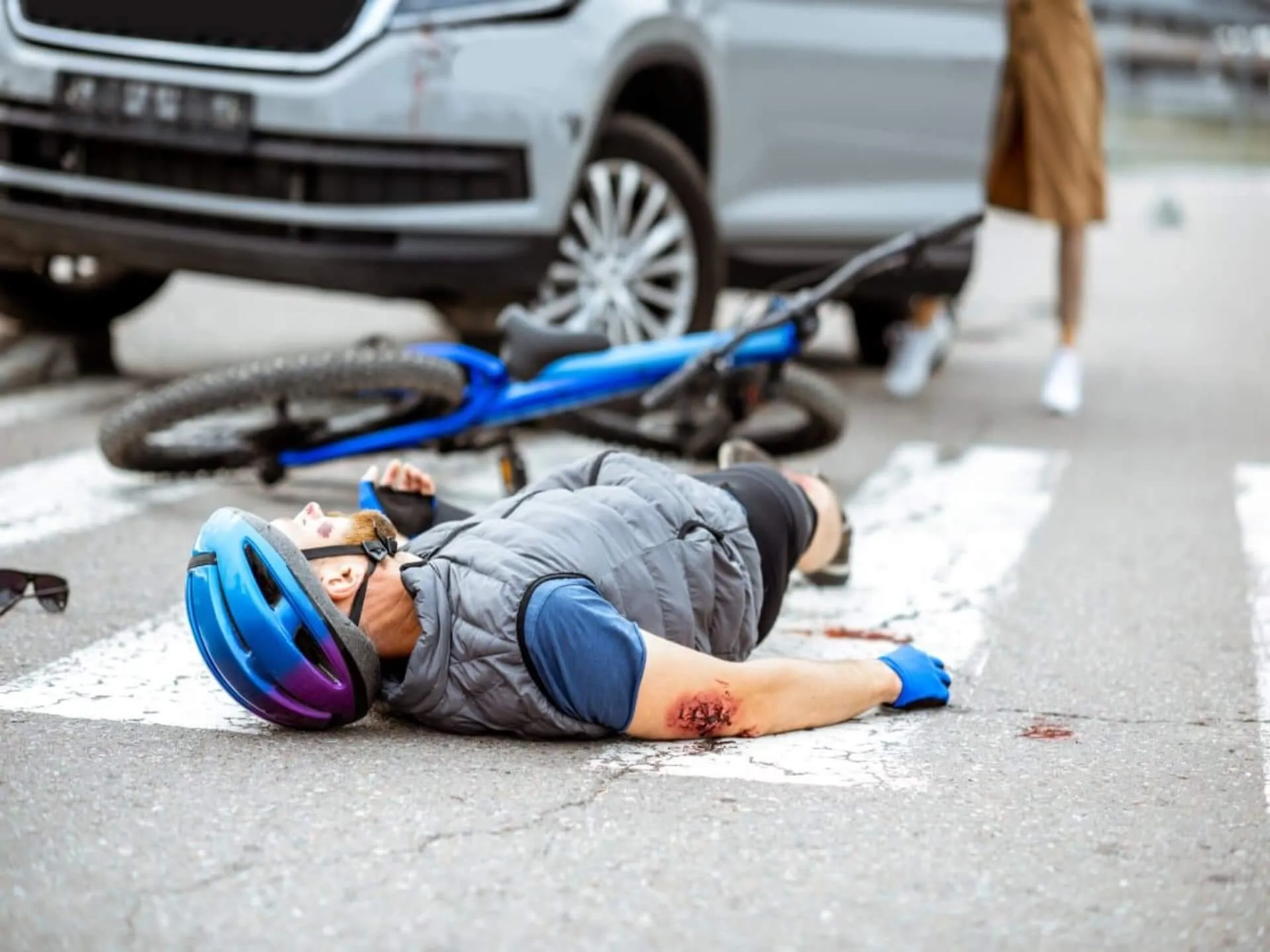
A cyclist is a driver under Texas law, with exceptions written for bicycles
Texas gives a person operating a bicycle the rights and duties of a driver operating a vehicle, unless a bicycle-specific provision alters the right or duty or the duty cannot by its nature apply to a bicycle. The bicycle chapter applies on a highway and on a path set aside for bicycles, and it applies to mopeds and electric bicycles as well. Through that bridge, the rules about following distance, yielding, signaling, and stopping that govern a car govern a cyclist too, and the duties a driver owes to other traffic are owed to a cyclist in the roadway.
The bridge is not a statement that a bicycle is a motor vehicle for every purpose. The bicycle-specific rules below alter some duties, and other laws written for motor vehicles do not reach a bicycle at all. Which rule governed a particular movement is a legal question counsel answers from the facts, and it is one of the first questions in a bicycle case, because the driver’s account and the rider’s account can disagree about exactly where the bicycle was and where it was allowed to be.
Where the crash report, the investigating agency’s file, and nearby video come from, and why they are requested early, is the same as for any Houston car accident. What follows is the bicycle side of that record.
Where the rider was: the right edge, the lane, and the bike lane
The Texas rule on position is specific. A cyclist moving slower than the other traffic on a roadway must ride as near as practicable to the right curb or edge, unless the cyclist is passing another vehicle, is preparing to turn left at an intersection or into a driveway, is avoiding a condition on the roadway, including a parked or moving vehicle, a pedestrian, an animal, or a surface hazard, or is riding in an outside lane that is less than fourteen feet wide without an adjacent bicycle lane or that is otherwise too narrow for a bicycle and a motor vehicle to travel side by side safely.
On a one-way roadway with two or more lanes, a cyclist may ride near the left curb instead. Cyclists may ride two abreast in a single lane so long as they do not impede the normal flow of traffic.
The statute is framed around the right side of the roadway and its exceptions, not around a duty to stay in a bicycle lane, although one exception mentions an adjacent bicycle lane, so where a bike lane exists the analysis turns on which exception applied. A cyclist riding in a general traffic lane is not out of place by that fact alone. When a driver says the cyclist should have been in the bike lane, the answer comes from the width of the lane, the location of parked cars, debris, and drainage grates, and what the rider was preparing to do. Those facts are documented from the scene, from the City’s bikeway designation for the street, and from photographs taken before the roadway changes.
Intersections, turning drivers, and driveways
A bicycle in the roadway is part of the oncoming traffic a left-turning driver must yield to, and a driver turning right across a bicycle lane or changing lanes into one owes the same safe-movement duty. The same turning and lane rules govern a motorcycle collision, where a driver’s claim not to have seen a two-wheeled vehicle is tested from sight lines, lighting, and time in view. The same test applies to a bicycle, with one difference in the evidence: a cyclist’s speed is lower and is sometimes recorded by the rider’s own cycling computer or phone application.
Driveways and alleys are governed by the same stop-and-yield rule that protects a pedestrian on the sidewalk, and since September 1, 2025, the emerging driver’s yield has run to a sidewalk user as well as to a pedestrian. Texas law now defines a sidewalk user, which includes a person lawfully riding a bicycle on a sidewalk, and has given that person a set of crosswalk rules: a driver must stop and yield to a sidewalk user crossing in a crosswalk where no signal controls the crossing, while the sidewalk user may not leave the curb suddenly into the path of a vehicle too close to stop, may not enter the crosswalk faster than is reasonable and prudent, and must stop and yield at a stop sign before entering the crosswalk. Those provisions are new, and the firm reads the current text before applying them.
A cyclist who dismounts and walks the bicycle across a street is a person on foot for that crossing, and the crossing and right-of-way rules for pedestrians apply.
Passing distance: the state rule and the City’s own ordinance
A driver passing a bicycle must pass to the left at a safe distance and may not move back to the right until safely clear. Texas sets no number for that distance. A 2009 bill that would have set a statewide distance for passing vulnerable road users passed the Legislature and was vetoed, and the state has not enacted one since. Houston adopted a local safe-passing ordinance for vulnerable road users in 2013, after several other Texas cities had adopted similar ordinances. Its exact terms, including any distance it specifies, are confirmed against the City’s current Code of Ordinances before the firm relies on them in a particular case, because a local ordinance can be amended.
Whether a pass was made at a safe distance is a question of fact: the width of the lane, the speed of the vehicle, the position of the cyclist, and what the mirror-to-handlebar contact or the wind blast of a close pass did to the rider’s line. A sideswipe leaves paint and contact marks on the bicycle and the vehicle. A pass that never touched the rider but forced the bicycle into a curb or a parked car leaves a different record, and witnesses and video matter more.
Dooring, parked vehicles, and delivery vans
Texas prohibits opening a vehicle door on the side available to moving traffic unless it can be done in reasonable safety without interfering with traffic, and prohibits leaving a door open on that side longer than needed to load or unload a passenger. A cyclist struck by an opening door, or forced into traffic to avoid one, has a specific statutory rule on the driver’s or passenger’s side of the ledger, and the Texas crash report has a contributing-factor code for a door opened into a traffic lane. A vehicle pulling out from a parking space or a curbside stop into a cyclist’s path raises the same questions of looking and yielding as a driveway.
Delivery vans, rideshare vehicles, and service trucks stopped in or beside a bicycle lane change the rider’s path and the sight lines of everyone behind them. When the vehicle that struck or blocked a cyclist was a company vehicle, what the company controlled and what its dispatch and telematics records show become part of the review. When it was a commercial truck, so do the carrier’s records.
The bicycle, its lights, and the helmet question
Texas requires a bicycle to have a brake capable of making a braked wheel skid on dry, level, clean pavement, and at night it requires a white front lamp visible from at least five hundred feet and a red rear reflector of an approved type or a red rear lamp visible from five hundred feet. Whether the bicycle had those things is recorded from the bicycle itself, which is why it should be kept as it was after the collision. The damage to the frame, fork, and wheels shows the direction and force of contact, and the state of the lamps and reflectors shows what the bicycle offered a driver to see.
Electric bicycles are bicycles under Texas law, with definitions of their own. The statute defines three classes by whether the motor assists only while the rider pedals or can propel the bicycle on its own, and by a top assisted speed of twenty or twenty-eight miles per hour, requires the class, top speed, and motor wattage to be labeled, requires the motor to disengage when pedaling stops or the brakes are applied, and bars anyone under fifteen from operating the fastest class. A device outside those definitions may be a motor-assisted scooter or a moped, which is why the firm confirms what the device was before it applies the bicycle rules.
Texas has no statewide bicycle-helmet requirement for adults. Local rules can differ, especially for children, so the rider’s age and the city where the collision occurred matter. Helmet use does not by itself determine who caused a collision; any injury-related significance must be evaluated with the medical and collision evidence. The crash report records helmet use in the same field kept for motorcyclists.
Cameras, witnesses, and the crash report
On the Texas crash report a bicycle, electric or not, is a unit type of its own rather than a motor vehicle, with fields for lighting, traffic control, and the helmet entry; the officer’s contributing-factor codes are weighed alongside the physical evidence rather than treated as the final word. Video from businesses, homes, and other drivers is short-lived, and a cyclist’s own camera, cycling computer, or phone application may add the rider’s speed and route. Witnesses carry particular weight in a bicycle collision, because the rider may be the only person who saw the whole event from the roadway and may not be able to describe it at the scene.
When the driver left, hit-and-run identification work proceeds alongside the review of potentially responsible parties and applicable coverage.
Riding in Houston: bikeways, trails, and shared streets
Houston’s Bike Plan, adopted by City Council in 2017, plans a citywide network of high-comfort bikeways, and Houston Public Works publishes the bikeway map that shows which streets carry protected lanes, painted lanes, shared-lane markings, or nothing at all. The Houston Parks and Recreation Department maintains multi-use trails along the bayous and through parks that cross city streets at marked points. The City’s Vision Zero Action Plan uses the term vulnerable road users for people walking, rolling, and biking and sets out design priorities for them.
None of that says a particular street is safe or unsafe. It matters because the kind of facility the rider was on decides what evidence exists: the City’s design and signage records for a protected lane, the trail crossing’s controls, or the lane width and parking layout of a street with no bicycle facility at all.
The Texas Department of Transportation’s Houston Traffic Safety Coalition lists bicycle safety among its focus areas for the six-county Houston District, and the crash report the coalition’s data rests on is the same report the review begins with.
Bicycle, pedestrian, scooter, and motorcycle: which page applies
- A person on foot, including a cyclist walking the bicycle, is a pedestrian.
- A motor-assisted scooter, rented or owned, has its own statute and its own Houston rules. An electric bicycle is reviewed as a bicycle.
- A motorcycle is a motor vehicle with a licensed operator.
- The crash report, the video, and the way Texas weighs each party’s conduct are common to every car accident; a company vehicle or a commercial truck adds the company’s or the carrier’s records.
- When a cyclist dies, the family’s and the estate’s claims become a wrongful death claim, and the roadway review described here becomes its event record.
Talking with the firm about a bicycle collision
Photographs of the lane, its markings, and any parked or stopped vehicles are worth taking before the street changes, and the bicycle, the helmet, and the clothing should stay as they are. Those photographs, the crash report number, the names of witnesses, any ride data from a cycling computer or phone, and the medical records to date are what a consultation starts from. Leatherwood & Schindler will work to identify where the rider was entitled to be, what the driver was required to do, and which records show what happened.