

Identification and the work that can proceed alongside it
Texas requires a driver involved in a collision that causes injury or death to stop at the scene or as close to it as possible, to return if the vehicle did not stop there, to determine whether anyone needs aid, and to remain until the driver has given name, address, registration number, and insurer to the people involved, shown a license if asked, and provided reasonable assistance to anyone injured. The duty to stop and exchange information applies when only vehicles are damaged, with one wrinkle that matters in Houston: on a freeway in a metropolitan area, drivers whose vehicles can be driven safely must move to a safe place, such as the frontage road, before exchanging information, so a driver who pulled off the freeway has not necessarily left the scene. A driver who strikes an unattended vehicle must find the owner or leave a written notice. Leaving without doing those things is a criminal offense, and it is investigated as one.
Identifying the vehicle is one important task, but evidence preservation, potentially responsible parties, and applicable coverage can be investigated before the driver is found. We examine the identification evidence, work alongside the police investigation, and review what the injured person’s own coverage may add. We cannot promise that a driver will be identified. Some are never identified, and the review is built so that it does not depend on it.
Video, debris, paint, and parts: the physical trail
Identification starts with the cameras that faced the roadway at the moment of the collision: businesses, homes with doorbell cameras, dash cameras in other vehicles, and any camera the investigating officer wore or carried. Houston TranStar’s freeway cameras are monitoring tools that do not record, which is why the search begins with private and agency cameras, and why it begins quickly: as after any Houston car accident, camera systems keep footage only briefly. A written preservation request to a business or homeowner, identifying the date, time, and camera view, is the ordinary way to keep footage from being overwritten. It asks; it does not compel.
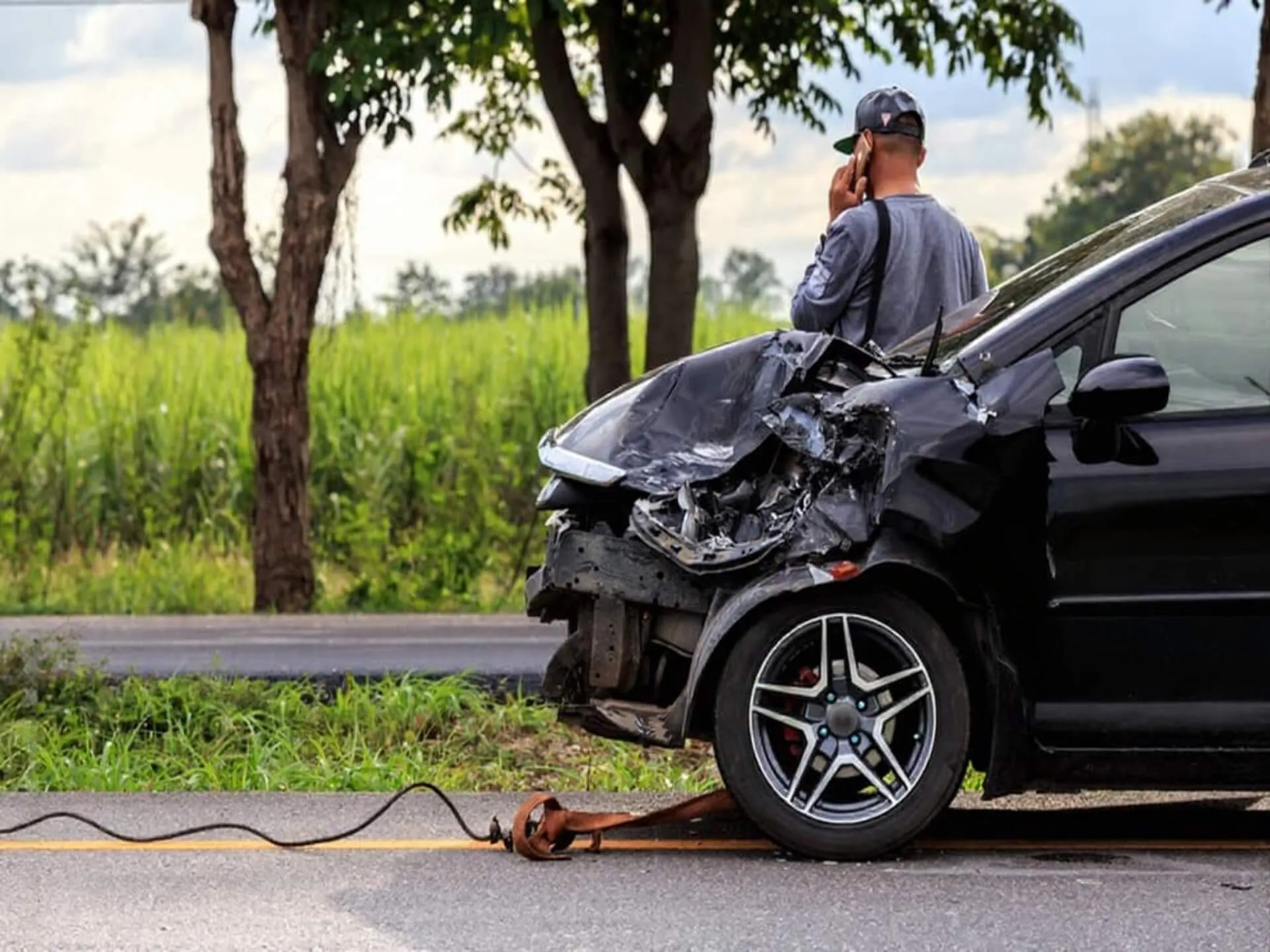
The scene itself carries evidence. Paint transferred to the struck vehicle, fragments of lamps, trim, and grille left on the roadway, and the pattern and height of the damage can narrow the make, model, color, and year of the vehicle that left and can later be compared with a suspect vehicle. Laboratory comparison speaks to possible origin rather than a unique match, so it narrows and corroborates rather than decides. The practical consequence is simple. The damaged area should be photographed before it is cleaned, fragments should be kept rather than swept away, and the police should be told what was recovered.
Automated license-plate readers operated by the Houston Police Department are an investigative tool that the department’s policy reserves for criminal investigations, not a record the injured person can request for a civil claim. The department’s written policy restricts their use to criminal investigations and bars their use for civil purposes, so the injured person’s contribution is the best possible description of the vehicle and the direction it took, not a request for the data.
Working alongside the police investigation
Texas requires a driver to notify the police immediately of a collision that causes injury or death or leaves a vehicle undrivable, and the police report is the beginning of every hit-and-run investigation. In Houston, the Police Department’s Vehicular Crimes Division investigates collisions with a criminal element. Its hit-and-run unit conducts on-scene investigations of collisions in which a driver failed to stop and render aid, and follow-up investigations of those and of failure-to-stop-and-give-information cases, including property-damage collisions. A hit-and-run cannot be reported through the department’s online reporting system; it is reported by phone, and both the department and Crime Stoppers accept tips about a vehicle or a driver. Outside the city, the Sheriff’s Office or the local police department takes the report.
The crash report carries a hit-and-run indicator for the unit that left, records the driver as unknown, and is supposed to be supplemented if the driver is later identified, so the first copy may say very little and a later copy may say more. While the investigation is open, part of the investigative file may be withheld, as it is in any pending criminal case, including a drunk driving prosecution. The firm requests the report and the basic information that must be released, keeps in contact with the investigating unit, supplies the witness names and video it has found, and obtains the fuller file when the law allows.
The injured person’s own coverage as part of the record
When the driver is unknown, the injured person’s own automobile policy may become a central document while other potentially responsible parties and policies remain under review. Texas requires insurers to include uninsured and underinsured motorist coverage in every auto policy unless a named insured rejected it in writing, and many Texas policies define a hit-and-run vehicle whose driver cannot be identified as an uninsured vehicle. For an unidentified driver, Texas law and the common policy forms generally require that the unknown vehicle actually struck the insured person, the insured’s vehicle, or the vehicle the insured was in; a vehicle that caused a swerve without contact raises a different, fact-specific question. Personal-injury-protection coverage, where the policy carries it, pays listed expenses without regard to fault and does not depend on finding anyone.
A claim under the injured person’s own policy is a claim against that insurer, and the policy’s own terms govern it. Policies commonly require prompt notice to the police in a hit-and-run, prompt notice to the insurer, cooperation with its investigation, and an opportunity to inspect the vehicle before repair, and the wording of the policy in force controls. The firm requests the policy at the first conversation, as one part of a review that does not depend on finding the driver.
When the driver is found
Identification adds the driver’s liability coverage as another potential source, evaluated alongside any employer, owner, platform, alcohol-provider, or other applicable coverage. The criminal case proceeds on its own track and may produce records the civil review can use without depending on its outcome. If the driver was impaired, the arrest and testing records of a drunk driving collision join the file. If the driver struck from behind, the sequence questions of a rear-end collision apply. A rideshare vehicle that leaves the scene may be identifiable from platform records as well as roadway evidence.
People on foot, on bicycles, and in parked cars
A pedestrian or cyclist struck by a driver who left has the same identification task and the same coverage question, and often a harder version of both, because there is no struck vehicle to carry paint and no vehicle of the person’s own at the scene. Uninsured motorist coverage under a policy in the person’s household may still apply to someone struck on foot, which is a policy question counsel reads rather than assumes. A parked vehicle struck by a driver who left is the reason the duty to leave a written notice exists; a claim for that damage is ordinarily a matter for the owner’s own policy, and the firm’s work concerns injuries.
Programs that may apply when a driver is never found
Texas operates a crime victims’ compensation program through the Attorney General’s office, and its published list of covered crimes includes hit-and-run collisions that cause injury or death. The program requires that the crime was reported to law enforcement and that the applicant cooperates with the investigation, it treats insurance and litigation proceeds as other sources to be accounted for, and it has its own eligibility rules and application periods. Whether it applies to a particular person is a question counsel evaluates. It is named here so that it is not overlooked.
Consulting the firm while the driver is still unidentified
A consultation after a hit-and-run begins with:
- what was seen of the vehicle and who else was there;
- which cameras faced the road;
- the police report number;
- photographs of the damage taken before it was cleaned; and
- the injured person’s own auto policy.
Leatherwood & Schindler works alongside the investigation, preserves the evidence that identifies a vehicle, and reads the policy so that the claim does not wait on an identification that may never come. When a hit-and-run proves fatal, a wrongful death claim raises family and estate questions that the firm coordinates with the investigation.