

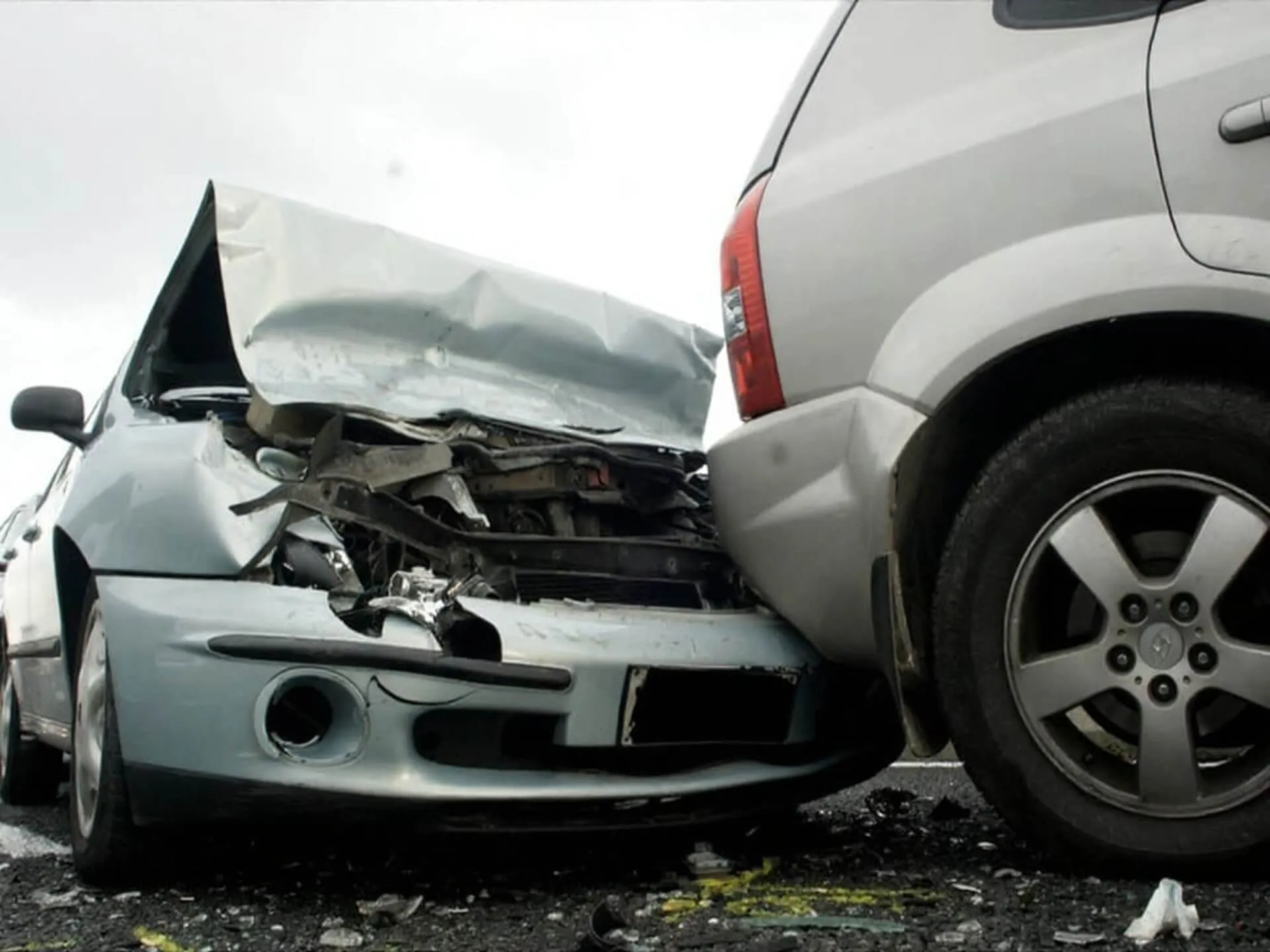
Sequence, distance, and speed: what the record has to show
A rear-end collision is the collision most people assume they understand. The vehicle behind hit the vehicle in front, so the driver behind was at fault. Texas law does not work that way. Texas courts have held repeatedly that the fact of a rear-end collision is not by itself proof of negligence, and that the person bringing the claim must show what the following driver actually did wrong and that it caused the harm. The same rule cuts the other way: a lead driver who stopped without warning, or whose brake lights had failed, is not excused by having been in front.
Texas gives every driver two duties that most rear-end reviews turn on. A following driver must keep a distance behind the vehicle ahead that allows a safe stop given the speed, the traffic, and the road, and every driver must control speed as necessary to avoid colliding with a vehicle lawfully on the road and slow for hazards. Those duties are measured by ordinary care, and whether a driver met them is decided from the evidence of speed, distance, attention, and conditions. The crash report, the investigating agency’s file, and the vehicle and video evidence are common to every car accident, with additional evidence needed to reconstruct the rear-end sequence.
Following distance, stopping distance, and the seconds before impact
Following distance and stopping distance are different things. Following distance is the gap the rear driver kept, which the Texas driver handbook describes as a following interval measured in seconds and which grows with speed. Stopping distance is how far the vehicle travels between the moment the driver perceives a reason to stop and the moment it stops, and it includes reaction time as well as braking. A rear-end review asks how large the gap was, how fast each vehicle was moving, when the lead vehicle began to slow, and how much of the following driver’s stopping distance was consumed before the brakes were applied.
The crash report names the officer’s opinion on those questions with two codes, followed too closely and failed to control speed, whose definitions track the statutes. They are the officer’s assessment, and the manual itself notes that not every contributing factor is a violation of law. The firm reads the codes as the starting point for the reconstruction, not as its conclusion.
Brake lights, sudden stops, and the lead vehicle’s conduct
Texas requires a driver not to stop or suddenly decrease speed without first giving a stop signal to the driver behind when there is an opportunity to do so, and it requires every vehicle to carry stop lamps that light when the brake is applied and are visible from a distance the statute sets. Whether the lead vehicle’s lamps worked, whether the stop was sudden, and whether the following driver had room to react are the questions the lead driver’s conduct raises. A sudden stop that the road conditions or traffic made necessary is analyzed differently from one that was not, and a following driver whose speed, distance, or attention was already deficient is not automatically excused because the lead vehicle stopped abruptly.
Stop-lamp condition has to be established from the vehicle itself. Texas ended its annual safety inspection for most passenger vehicles at the start of 2025, so there is generally no recent inspection record showing whether a car’s lamps worked. The lamps and their bulbs are examined before the vehicle is repaired, photographs and video are checked for lit lamps before impact, and the crash report has a vehicle-defect code for defective or missing stop lamps that the officer may have selected. Once a vehicle is repaired or sold, that evidence may be gone.
Vehicle data in a rear-end impact
Depending on the vehicle, model year, installed system, and trigger conditions, an event data recorder may capture a qualifying event. When data exists, it can help reconstruct speed, throttle, braking, and timing. It does not directly measure following distance or establish responsibility. The absence of recorded data does not establish that a collision was minor, and any available data is evaluated with video, physical evidence, witness accounts, and the rest of the collision record.
Chain-reaction collisions and the middle vehicle
A multi-vehicle collision is several collisions with several sequences, and Texas evaluates each driver’s conduct separately, as it does in every collision. The trier of fact assigns percentages of responsibility to everyone whose conduct contributed to the harm, but only where the evidence supports a finding against that person. A driver pushed into the vehicle ahead by an impact from behind is not automatically responsible for that second impact, a driver who braked first is not automatically free of responsibility for the first, and the driver at the back of the chain is not automatically responsible for every impact ahead. The order and timing of the impacts decide the analysis, and vehicle data, damage patterns on each vehicle, and video are how the order is established.
The middle vehicle is the hardest position, because its occupants are struck from behind and then strike the vehicle ahead, and the two impacts may have different causes. The firm reconstructs each impact on its own evidence before any percentage is discussed.
When the vehicle damage looks minor and the injury is not
Rear-end collisions can produce disputes about the relationship between visible vehicle damage and an occupant’s condition. Visible vehicle damage alone does not establish or exclude an injury or medical causation. Medical documentation and collision evidence must be evaluated together.
Contemporaneous medical documentation may become important when the nature, cause, or timing of an injury is disputed. That observation describes an evidentiary issue; it is not individualized medical advice, and this page does not treat divided biomechanical literature as settled medicine or law.
Stop-and-go traffic, work zones, and the Houston commute
Where traffic stops unexpectedly, the records that describe the setting are as important as the vehicle evidence. The City of Houston operates and periodically retimes its traffic signals, and signal-timing records for an intersection can be requested through the city’s public-information process. Houston TranStar logs monitored freeway incidents and publishes lane closures reported by TxDOT and the county toll road authority, so its records can show whether a stoppage, a closure, or a prior incident existed at the time and place. TxDOT describes work zones as places where drivers may encounter uneven pavement, narrow lanes, barriers, slow equipment, and vehicles that make sudden stops, and construction and lane-closure records for a work zone are part of the file.
None of that makes a stretch of road responsible for a collision. It establishes what each driver could see and expect, which is the question the following-distance and speed duties ask.
Rear-ended by a delivery van, company truck, or 18-wheeler
The sequence questions apply to any rear-end impact. The vehicle and the driver may raise additional questions.
- A van, pickup, or service truck that struck from behind brings in the company behind it.
- A commercial truck carries electronic logging, engine, telematics, and camera records that describe the seconds before impact in more detail than a passenger vehicle’s.
- Whether the driver behind was looking at a phone or a screen is a question of distracted driving evidence.
- When impairment is suspected, the arrest and testing records of a drunk driving collision come into the review.
- A driver who struck from behind and left raises the identification and coverage questions of a hit-and-run collision.
- When a rear-end collision proves fatal, a wrongful death claim raises family and estate questions that run alongside the sequence review.
Reviewing a rear-end collision with the firm
A consultation about a rear-end collision starts with the sequence as you experienced it: whether you were stopped or slowing, why, for how long, what you saw in the mirror, and what the other driver said. Leatherwood & Schindler reconstructs the seconds before impact from the vehicles, the setting, and the witnesses, and it forms its view of responsibility from that record rather than from which vehicle was in front.