

What a traumatic brain injury is
The Centers for Disease Control and Prevention describes a traumatic brain injury as an injury that affects how the brain works. A mild TBI or concussion can be caused by a bump, blow, or jolt to the head, or by a hit to the body that makes the head and brain move quickly back and forth, and an object entering the brain can also cause a TBI; the National Institute of Neurological Disorders and Stroke describes it as a brain injury caused by an outside force. A concussion is a mild traumatic brain injury. Clinicians describe brain injuries as mild, moderate, or severe, and that vocabulary is clinical shorthand that the field itself is refining: the federal institute convened a workshop in 2024 to move toward more precise, evidence-based classification. The label in a chart describes an assessment at a point in time and is not a measure of what the injury has meant for the person.
The first record: the event and the first evaluation
The record begins with what happened and with the first people who examined the person. The emergency medical services run report and the emergency department record document the mechanism of injury, whether there was a loss of consciousness, confusion, or a gap in memory around the event, the examination findings, and any imaging ordered. Care teams describe a person’s level of consciousness with the Glasgow Coma Scale, a clinical scoring tool based on eye, verbal, and motor responses with a total between three and fifteen, and they repeat it as the person’s condition changes. It records what the examiner observed; it is not a measure of the claim or a prediction. Responsibility for the event is investigated for its setting: a car or truck collision, a fall, an assault on a property where crime should have been anticipated, or a worksite.
A normal scan does not rule out a brain injury
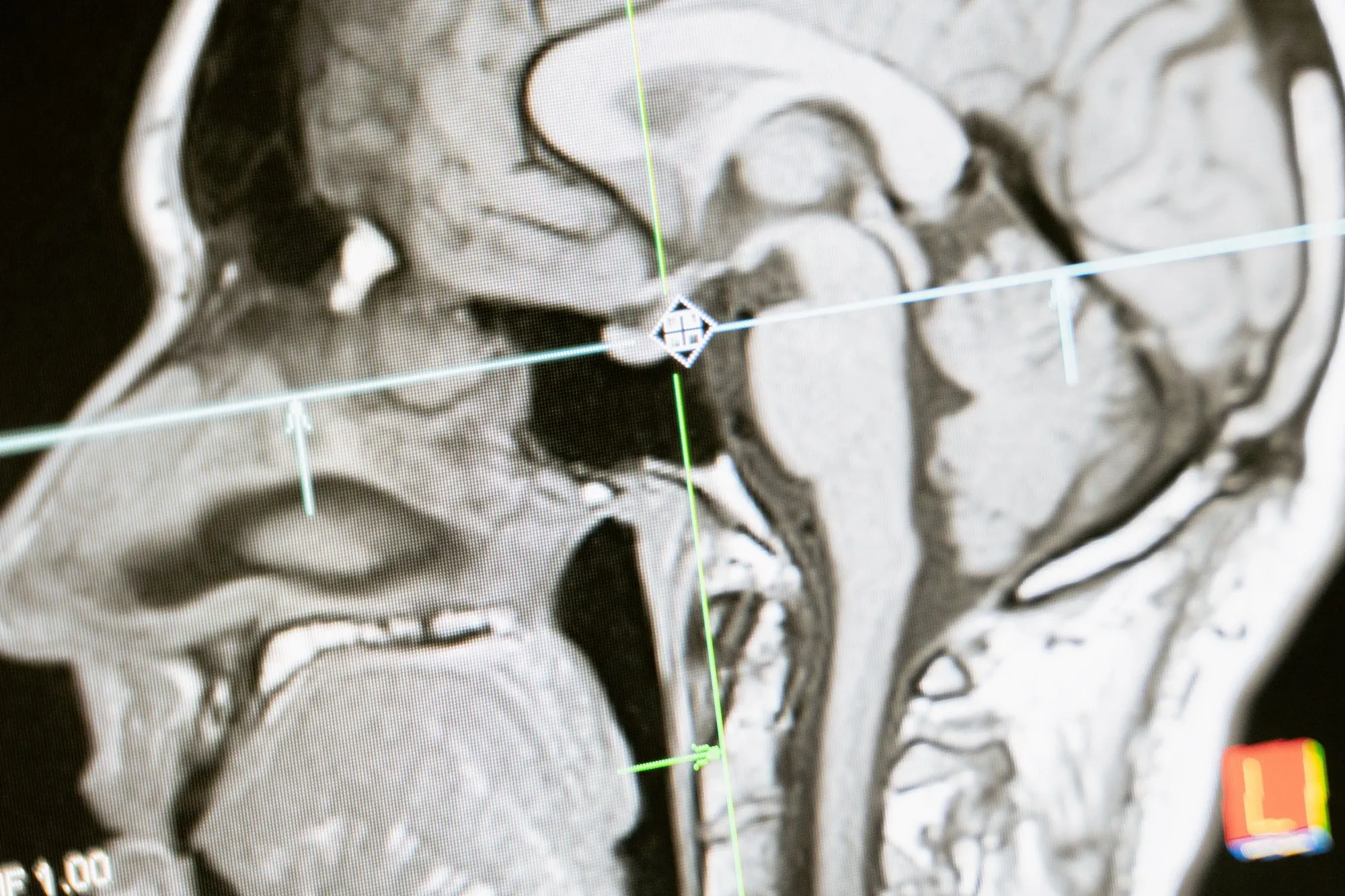
The CDC states that a brain scan such as a CT is not needed to identify a mild traumatic brain injury or concussion, and that a person may have one even when the injury does not appear on those tests. Imaging documents what it can show, including bleeding, swelling, and skull fracture, and a normal result is a fact in the record rather than the end of it. The firm requests the images themselves, not only the radiologist’s report, along with every later study, so that qualified clinicians can compare them over time. The diagnosis is made by clinicians from the mechanism of injury, the examination, and the symptoms, and a scan neither makes it nor unmakes it.
Symptoms over time
The CDC groups the signs and symptoms of a mild traumatic brain injury into physical, cognitive, emotional, and sleep-related categories, and states that symptoms generally improve over time, that some people have symptoms for months or longer, and that recovery may be slower for older adults, young children, and people who have had a brain injury before. The federal institute adds that recovery depends on the size, severity, and location of the injury and on the individual. The course is documented in follow-up visits, neurology and rehabilitation records, and the person’s own dated account of symptoms and of what has changed at work, at school, and at home, and the observations of the people who live with the person are part of that record.
Neuropsychological and functional assessment
Changes in attention, memory, processing speed, language, and mood are measured by qualified clinicians. A neuropsychologist administers standardized testing and interprets the results against expected performance and the person’s history; a neurologist or physiatrist documents neurological findings and treatment; speech-language and occupational therapists document communication and daily function; a mental health clinician documents changes in mood and behavior. A vocational assessment documents what work remains possible. The review relies on those assessments, not on a symptom checklist, because Texas courts require that opinions about causation, condition, and future needs come from people qualified to give them and rest on reliable methods.
The person before the injury
A brain injury is shown by change, so the record before the injury is requested early. Prior medical records, any earlier concussion or head injury, mental health history, and school or employment records establish what the person could do and how they functioned before. A condition that existed before the event does not defeat the claim: Texas law holds a responsible party answerable for making a prior condition worse, not for the condition as it was, and the baseline is how that change is measured. Leaving those records for the other side to find first serves no one.
Records and programs in Texas
Several Texas programs generate records without being part of any claim. The Texas Health and Human Services Commission’s Office of Acquired Brain Injury connects people to information and resources; its Comprehensive Rehabilitation Services program provides rehabilitation services to eligible people with traumatic brain or spinal cord injury, beginning with an interest list and an eligibility determination; and the Texas Workforce Commission’s vocational rehabilitation services provide evaluations and employment supports for people with brain injuries. A referral, a service plan, or an evaluation from any of them is a record of the person’s condition and needs at that time. For a student athlete, a Texas school district must maintain a concussion oversight team and a return-to-play protocol, and its records of a head injury are requested as well. None of these programs endorses any claim.
Brain injury, other impairments, or death: which page applies
A brain injury needs its own medical and functional record. Other lasting impairments, including spinal cord injury and the loss of vision or hearing, are documented as catastrophic injuries, and a person with more than one such injury is documented under each. A brain injury that proves fatal becomes a wrongful death claim. A first consultation starts with what happened, who has examined the person since, and what the people around them have noticed.