

“Catastrophic” describes the consequences, not a legal category
No Texas statute and no controlling Texas court decision defines “catastrophic injury” as a threshold for a personal-injury claim. The phrase appears in particular programs with meanings of their own: a federal statute providing benefits to public-safety officers defines it by whether the injury leaves the person permanently unable to perform work, including sedentary work, and the Texas workers’ compensation statute lists specific injuries that qualify for lifetime income benefits without using the word at all. Anyone who presents one of those lists as the legal definition of a catastrophic injury is describing a benefits rule, not the civil claim.
The word describes consequences here: an injury whose effects are permanent and change what a person can do. The claim does not turn on the label. It turns on proof of the injury, of how the event caused it, and of what it has changed, and that proof is assembled from medical, functional, vocational, and family records.
Two records: the event and the consequences
How the injury happened, and who is responsible for it, is investigated for its setting, whether a car or truck collision, a worksite, a vessel, an explosion, a property condition, or crime on a property. A product that failed raises a separate defective product question. The second record establishes what the injury did to the person, documented from the emergency and acute-care records through surgery, rehabilitation, and the functional, vocational, and family evidence that develops over months and years. We work on both records at once because neither is complete without the other.
Spinal cord injuries
A spinal cord injury is damage to the spinal cord, the bundle of nerves and nerve fibers that carries signals between the brain and the body. Clinicians describe it by its level and by whether it is complete or incomplete, meaning whether any sensation or movement remains below the level of the injury, and they record that description on a standard examination that is repeated over time. The description is clinical. It tells the reader of the record what the examiners found on the days they examined the person, and it neither ranks the claim nor predicts the outcome.
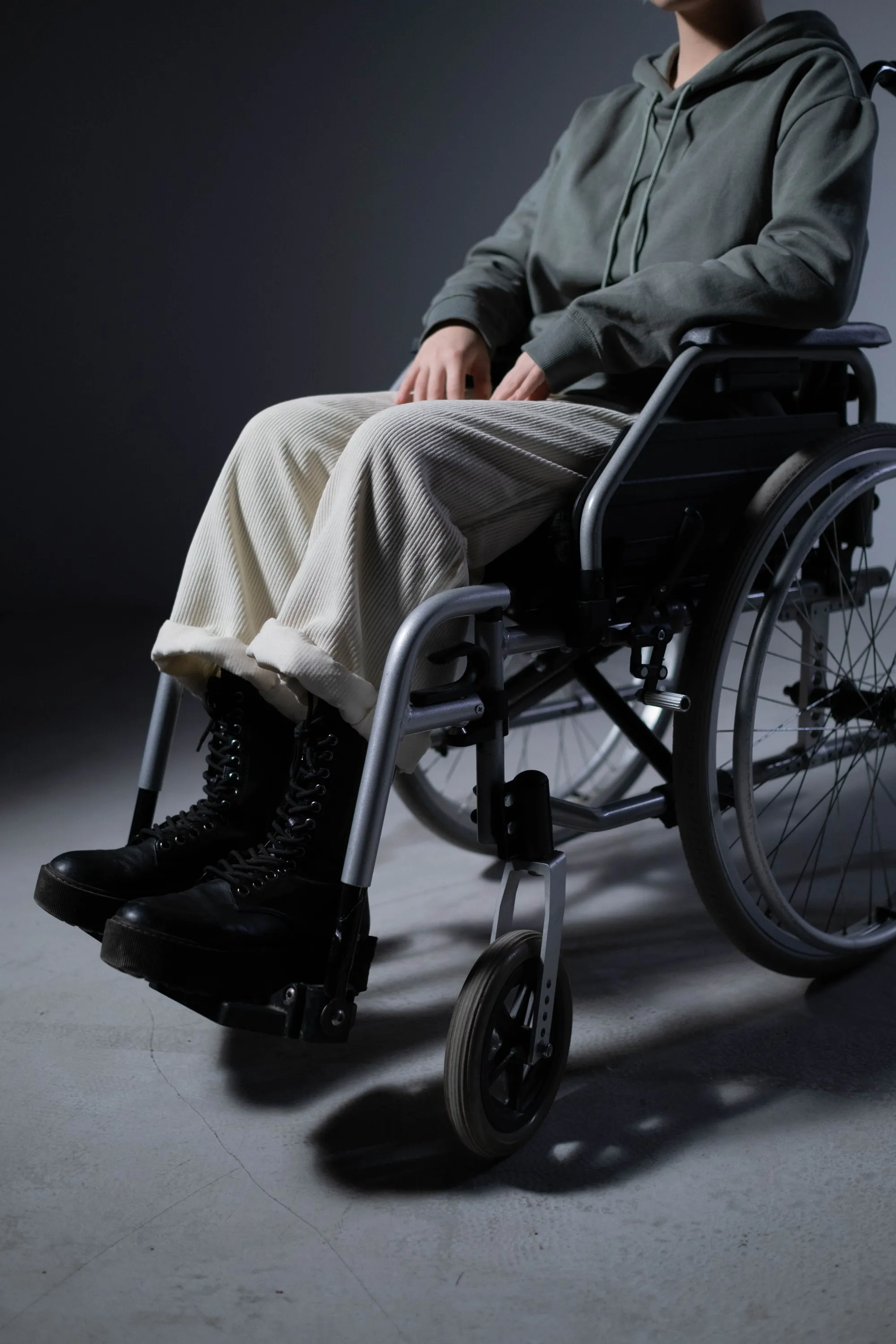
The record of a spinal cord injury runs from the emergency and surgical records through inpatient rehabilitation, and it continues in the records of bladder, bowel, and skin care, respiratory care where the injury is high, pain management, and the equipment the person uses: the wheelchair and its fitting, transfer devices, and the modifications made to a home and a vehicle. Each of those is documented by the provider who prescribed or fitted it, and each is a record in its own right.
Loss of use of a limb that remains
A limb that is still present can be lost to use: a nerve injury that leaves an arm without movement, a crush injury or severe fracture that leaves a leg unable to bear weight, or a joint that no longer functions after repeated surgery. The record of that loss is functional. Therapy notes document range of motion, strength, and what the person can and cannot do on each visit; the surgical record documents what was repaired and what could not be; the assistive devices prescribed, from braces to mobility aids, document what the person needs to compensate. An amputation is documented separately, and the two are kept distinct because their records differ.
Vision and hearing loss
Low vision, in the National Eye Institute’s description, is a vision problem that makes it hard to do everyday activities and that cannot be fixed with glasses, contact lenses, medicine, or surgery. Its record consists of the ophthalmology and neuro-ophthalmology examinations, visual field and acuity testing repeated over time, the treatment attempted, and the adaptive devices and training the person uses. Hearing loss is documented by audiological testing that describes the type and degree of loss in each ear, the treatment attempted, the hearing aids or implanted devices prescribed, and the effects on communication at work and at home. For both, the record from before the injury matters, because prior vision or hearing problems, prior noise exposure, and age-related change are read alongside the testing after the event, and the connection between the event, whether a blast, a head injury, a chemical exposure, or an eye injury, and the loss is documented by the clinicians who treated it.
Permanent impairment, work, and daily life
How a permanent injury changed the person’s life is shown by comparison. Employment records, the job description, and the medical records before the injury establish what the person did and could do. After the injury, a functional capacity evaluation documents what the person can physically do, a vocational assessment documents what work remains possible, and the accounts of the person and the people who live with them document the ordinary activities that changed. In Texas, a person who takes part in the Texas Workforce Commission’s vocational rehabilitation services or the Texas Health and Human Services Commission’s Comprehensive Rehabilitation Services program for spinal cord and brain injuries generates evaluations and service plans that become part of that record. The firm does not infer the effect of an injury from its name, and it does not assume that one person’s injury will affect them as it affected someone else.
Pre-existing conditions and the standard for opinions
A condition that existed before the event does not defeat the claim. Texas law makes a responsible party answer for the aggravation of a prior condition, and not for the prior condition itself, which is why the records from before the injury are requested early and read carefully: they are the measure of the change. Opinions about what caused an injury, what course it will take, and what the person will need must come from professionals qualified to give them, and Texas courts require that those opinions rest on reliable methods. The review is built from qualified assessments for that reason, rather than from checklists or from assumptions about what injuries like this one require.
Future needs are assessed, not assumed
The last part of the record concerns what comes next: equipment that wears out and is replaced, attendant care, future surgeries, therapy, medication, and the home and transportation the person will need. Those needs are documented by qualified professionals from the medical records and from examining the person, and the record distinguishes needs that have been confirmed and opinions that qualified professionals have given from assumptions about the future. A brain injury and a burn are each documented in their own way, and a death becomes a wrongful death claim. A consultation begins with what happened, where the person is being treated, and what has changed.