

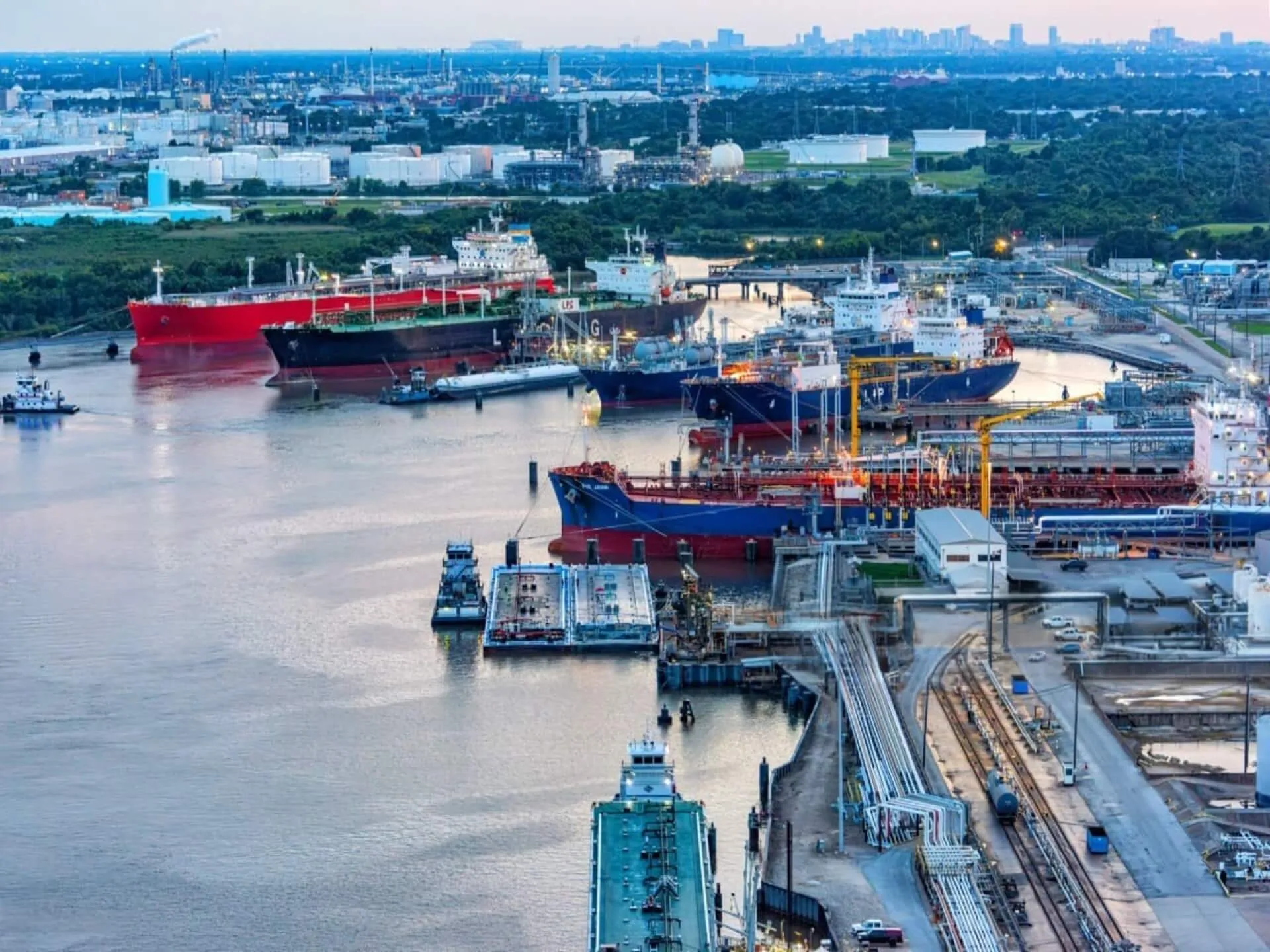
Dock, terminal, and shipyard work under a federal system
Most workers in Texas fall under the state’s elective workers’ compensation system, or outside it when an employer chooses not to carry coverage. Workers who load and unload vessels, repair and build them, and construct harbor facilities are different. Their injuries are often governed by the Longshore and Harbor Workers’ Compensation Act, a federal law administered by the U.S. Department of Labor that pays benefits without proof of fault and leaves open a separate negligence claim against a vessel or another company.
The review asks who qualifies, what benefits may be available, and how a claim against a vessel or a third party fits with those benefits. The vessel’s crew members are in a different system, the Jones Act. A harbor incident also requires identifying who holds the records and whether Coast Guard notification is required.
Two questions: where the work happened and what the work was
Coverage under the Act depends on two things that lawyers call situs and status.
The place: the injury must occur on the navigable waters of the United States, including any adjoining pier, wharf, dry dock, terminal, building way, marine railway, or other adjoining area customarily used by an employer in loading, unloading, repairing, dismantling, or building a vessel. Congress extended the Act onto the pier and terminal in 1972, when containers moved cargo handling landward, and courts have since covered intermediate cargo-handling steps and repair of loading equipment at terminals while declining to cover work on fixed platforms that has nothing to do with vessels.
The work: the worker must be engaged in maritime employment, a category the Act describes by example, including any longshore worker or other person engaged in longshoring operations and any harbor worker, including a ship repairer, shipbuilder, and ship-breaker. The Act then lists exclusions. Some are unconditional: a master or member of a crew of any vessel is never covered by this Act. Others, such as purely clerical work, employment by a club, camp, restaurant, or retail outlet, certain marina work, vendors temporarily on the premises, aquaculture, and the building or repair of small recreational vessels, apply only if the worker is covered by a state workers’ compensation law.
Both questions are decided from the facts of the job and the place, and both are reviewed by counsel from the assignment records, the employer’s business, and the location of the injury. A worker who drives a container handler in the yard, checks cargo at the gate, or repairs a crane at a Ship Channel terminal should not have to guess which side of these lines the work falls on.
Benefits from the employer, without proving fault
When the Act applies, the employer is liable for benefits and must secure them through an insurance carrier or an approved self-insurance program, and benefits are payable irrespective of fault. The Act describes medical care for as long as the nature of the injury or the process of recovery requires, and the worker is generally able to choose the treating physician. It describes wage-loss compensation for total and partial disability, calculated from the worker’s average weekly wage within a national maximum and minimum the Department of Labor publishes each year, along with vocational rehabilitation and, when a worker dies, benefits for the surviving spouse and children and a funeral allowance.
This page states no amounts or percentages. The Department publishes the current figures, and the calculation for a particular worker depends on wage history and the degree of disability.
The employer must report a lost-time injury to the Department on its own form within the period the Act sets, and unless it formally disputes liability it must begin paying benefits promptly without waiting for an award. When it does dispute the claim, the Department’s district office holds informal conferences to resolve the dispute; a dispute that cannot be resolved informally goes to a formal hearing before a Department of Labor administrative law judge and then to the Benefits Review Board. Houston is served by a suboffice of the program’s Southern District.
The employer’s liability is exclusive, with one exception
The employer’s liability for benefits is exclusive. It takes the place of all other liability of the employer to the worker, the worker’s family, and anyone else entitled to recover for the injury or death. The exception is an employer that failed to secure coverage as the Act requires: that worker may elect to claim benefits or to sue, and the employer may not defend by blaming a fellow worker, arguing the worker assumed the risk, or pointing to the worker’s own negligence. Whether the exception applies is a legal question answered from the coverage records, not from the size of the company.
Claims against the vessel and other companies
Exclusivity protects the employer. It does not protect a vessel or another company whose negligence caused the injury.
The Act gives a covered worker injured by the negligence of a vessel a claim against the vessel as a third party. The Supreme Court has described the vessel’s duties in three parts:
- Turnover and warning: to turn the ship and its equipment over to the stevedore in a condition that allows cargo operations to be carried on with reasonable safety, and to warn of hidden dangers the vessel knows or should know about.
- Active control: to use reasonable care over the areas and equipment that remain under the vessel’s active control during the operation.
- Intervention: to intervene when the vessel knows of a dangerous condition and that the stevedore is unreasonably continuing to work in the face of it.
The vessel has no general duty to supervise or inspect the stevedore’s work. The claim may not rest on the vessel’s unseaworthiness, and a worker employed by the vessel itself to load cargo or to repair the ship faces limits the statute spells out.
Other third parties, such as a terminal operator, a trucking company, or an equipment lessor, are analyzed under ordinary negligence principles. The Act does not make a worker choose between benefits and a third-party claim, but the two interact: accepting compensation under a formal award can, after a period, assign the third-party claim to the employer, and a settlement with a third party for less than the compensation entitlement requires the employer’s and carrier’s prior written approval or benefits can end. Raising the interaction with counsel before anything is signed is therefore part of the review.
Records held by the employer, the terminal, and the vessel
- The employer and its carrier: the employer’s first report of injury to the Department, the posted designation of the official to whom injuries are reported, the worker’s written notice and claim forms, the carrier’s payment or dispute filings, wage records used for the average weekly wage, gang and shift assignments, dispatch records where a hiring hall is involved, training and protective-equipment records, incident and near-miss reports, and the injury logs federal safety rules require.
- The terminal operator: gate and equipment records, crane and container-handler maintenance and inspection files, yard plans, camera footage, and vessel schedules for its own facility.
- The vessel: the cargo stow plan, the condition of hatches and gear, the cargo-gear register and crane and winch certificates, the deck log during cargo operations, and the communications with the stevedore at turnover, which bear directly on the three duties described above.
- The stevedore’s superintendents and foremen: pre-shift safety talks, hazard reports made to the vessel, and gang timesheets.
- The Department of Labor: the claim file, the memoranda from any informal conference, and any compensation order.
Terminal and vessel evidence moves quickly: the ship sails, the gear returns to service, and camera systems overwrite. That is why the firm addresses preservation requests to each company for the records it controls, as it does in any maritime matter.
Port Houston’s terminals and the companies inside them
The Longshore Act’s covered places are concrete in Houston. Port Houston owns and operates eight public terminals along the 52-mile Houston Ship Channel, which also includes more than 200 private terminals. The people working at those facilities are usually employed by private stevedoring companies, terminal operators, ship-repair and fabrication yards, and marine construction contractors, not by the port authority or the vessel, which is why identifying the employer and its carrier is the first step in a claim.
Workers on the outer continental shelf who are not vessel crew are covered through an extension of this Act that applies to offshore accidents, and civilian employees working overseas on defense contracts are covered through another extension, the Defense Base Act. Whether the firm reviews matters under those extensions is a question to raise at the first conversation.
Excluded workers, crew members, and families: other pages
- A worker who falls outside the Act’s coverage, such as an excluded clerical or vendor employee with state coverage or a warehouse worker away from the waterfront, may be in the Texas system that governs most workplace injuries.
- A member of a vessel’s crew has the negligence, unseaworthiness, and maintenance-and-cure remedies of a Jones Act claim.
- Platform, rig, and outer continental shelf matters are offshore accidents.
- Marina and small recreational-vessel work is often excluded from the Act, and recreational incidents are boating accidents or jet ski accidents.
- A death at a terminal or shipyard brings in the Act’s death benefits and the family and estate questions of a wrongful death claim; a family may also have a negligence claim against a vessel or another company.
Talking with the firm about a dock or shipyard injury
A dock or shipyard review starts with the employer’s name and the terminal or yard, the vessel involved and its owner if one was, the other companies working nearby, whether the injury was reported and to whom, what the carrier has paid or disputed, and the medical care so far. Leatherwood & Schindler identifies which framework applies and which companies outside the employer relationship require review. A consultation begins with the documents the worker already has.