

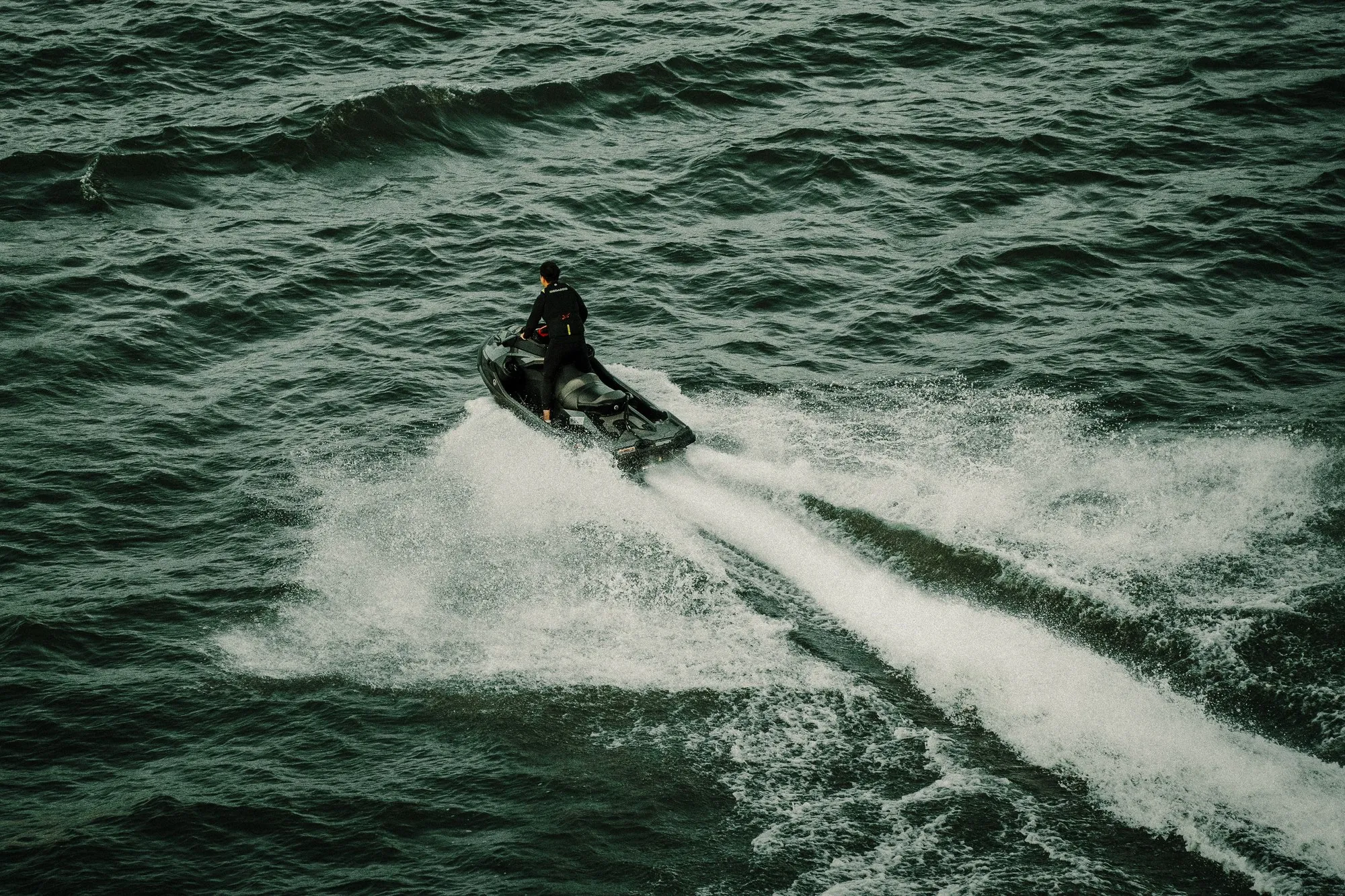
Jet skis are personal watercraft, and Texas regulates them as motorboats plus more
Texas law defines a personal watercraft as a motorboat designed to be operated by a person sitting, standing, or kneeling on it rather than inside it. Every rule that applies to a motorboat applies to a personal watercraft, and the Water Safety Act adds a section written specifically for them. The Texas Parks and Wildlife Department enforces both.
People call these vessels jet skis whatever the brand. Jet Ski is one manufacturer’s trademark, other manufacturers sell comparable vessels under other names, and Leatherwood & Schindler is not affiliated with any of them. This page uses the common term where readers expect it and the legal term, personal watercraft or PWC, where the rules do.
The page addresses serious injuries to a rider, a passenger, a person being towed, a swimmer, or someone on another vessel when a personal watercraft is involved. Collisions between conventional boats, and the reporting and record framework shared by all boating incidents, are explained separately.
The Texas rules specific to personal watercraft
The Act prohibits operating a personal watercraft:
- unless every person riding on it or being towed behind it wears a Coast Guard approved life jacket;
- without the engine cutoff lanyard attached to the operator, when the manufacturer equipped the vessel with one;
- between sunset and sunrise;
- within 50 feet of another vessel, a person, a stationary platform, or the shore, except at headway speed;
- by an operator under 13 unless a person at least 18 who can lawfully operate it is on board;
- while towing a skier, a tube, or a similar device unless the vessel is designed to carry at least two people;
- by jumping another vessel’s wake recklessly or unnecessarily close to that vessel;
- in a manner that requires the operator to swerve at the last possible moment to avoid a collision.
Boater education applies as well: a person born on or after September 1, 1993, needs a boater education card or a Coast Guard credential to operate a personal watercraft, subject to exemptions Texas law defines. The reckless-operation, excessive-speed, and circling rules that govern all motorboats also apply, and so do the criminal offenses for operating a watercraft while intoxicated.
These rules frame the review because they define what each rider, owner, and rental company was required to do. A violation is evidence of how the incident happened, not a conclusion about who is responsible for it.
Why steering response can diminish when throttle is released
Many conventional personal watercraft are propelled and steered by directing a jet of water. Because those models rely heavily on jet thrust for steering, steering response can diminish when the throttle is released. The National Transportation Safety Board described that behavior in the models it studied in 1998, including their limited turning ability while coasting, and called it counterintuitive for novice operators facing a potential collision. That historical finding does not describe every current model.
Newer models may include off-throttle steering or braking assistance, and current industry guidance describes steering behavior that varies by model and system. What a particular rider was told about the vessel, whether the vessel had such a system, and whether it worked as intended are separate questions. The firm reviews them from the owner’s manual, the rental briefing, and the vessel itself, and product questions are reviewed separately. Nothing here states a cause; the cause is what the investigation is for.
Rentals and first-time riders
Rental fleets put personal watercraft in the hands of people who may never have operated one. A rental business is a vessel livery under Texas law, with the same insurance, instruction, acknowledgment, and record-keeping duties that apply to any boat rental. For a personal watercraft the instruction matters most on the points a first-time rider is least likely to know: how steering response changes with throttle on that model, that the lanyard must be attached, and how close it may come to other vessels, people, and the shore.
The rental file is therefore central to the review. It shows what the renter was told, whether age and boater-education requirements were checked, which vessel was assigned, and what condition the fleet’s maintenance records show it was in. Where a fleet records engine hours or location, that data can show where and how fast the vessel was operated. Retention periods are short, so the firm asks the livery to preserve the file early. The effect of a signed waiver is a legal question counsel reviews.
Minors, owners, and supervising adults
Personal watercraft incidents can involve teenagers. Texas law requires an adult who can lawfully operate the vessel to be on board when the operator is under 13, requires boater education for younger operators generally, and allows the department to notify a personal watercraft’s owner when a person under 18 operated it in a prohibited way.
Who owned the vessel, who permitted the rider to use it, what the owner or supervising adult knew about the rider’s experience, and whether the rules were followed are facts the firm establishes from the registration, the family or rental arrangement, and the witnesses. Whether those facts carry legal responsibility for a collision is a conclusion counsel reaches afterward, not one the page offers.
Reports, investigators, and records
The reporting duties and the investigating agencies are the same as for any boating incident, including who may obtain the officer’s report. Two details matter here: the officer’s report form records whether a vessel was rented, and off-throttle steering is among the contributing factors an officer can note.
Beyond the official file, a personal watercraft incident tends to leave a particular trail: phone and action-camera video from riders and bystanders, the rental briefing and acknowledgment, the fleet’s hour and location data if it exists, the vessel’s manual and any recall notices, and the accounts of people on the beach, the dock, or nearby boats. Speed and distance are often disputed, and this material is what allows the dispute to be resolved from evidence.
Boats, commercial use, defects, and deaths: other pages
- Collisions and incidents involving conventional boats, with the full explanation of reporting, investigation, alcohol offenses, and report access, are boating accidents.
- A personal watercraft used commercially, such as a guided tour or a rescue or film operation with a paid operator, raises maritime accident questions.
- A defect in steering, throttle, hull, or cutoff systems is a defective product question.
- A death brings in the family and estate questions of a wrongful death claim.
Talking with the firm about a personal watercraft incident
What helps most at the start is the vessel’s make and whether it was rented, the ages of the riders, the location and time, any video, the names of witnesses and responding officers, and the medical care that has followed. A consultation begins with those facts, and the firm identifies which rental, agency, and manufacturer records to request before they are lost.